
D3 Conference History & Recruiting
The New England Small College Athletic Conference (NESCAC) was founded in 1971 and consists of 11 liberal arts colleges. Through 2026, NESCAC institutions have won 138 NCAA Division III team national championships. The conference also recognizes additional national championships in non-NCAA-sponsored sports, including men’s rowing, women’s rowing, men’s and women’s squash, and sailing. Moreover, NESCAC football enters a new era in 2026, as the conference’s 10 programs are eligible for the Division III postseason for the first time. The NESCAC champion receives the conference’s automatic bid, while other teams remain eligible for at-large selection.
Amherst College (Amherst, Mass.)
Williams College (Williamstown, Mass.)
Middlebury College (Middlebury, Vt.)
Bowdoin College (Brunswick, Maine)
Wesleyan University (Middletown, Conn.)
Hamilton College (Clinton, N.Y.)
Tufts University (Medford, Mass.)
Colby College (Waterville, Maine)
Bates College (Lewiston, Maine)
Connecticut College (New London, Conn.)
Trinity College (Hartford, Conn.)
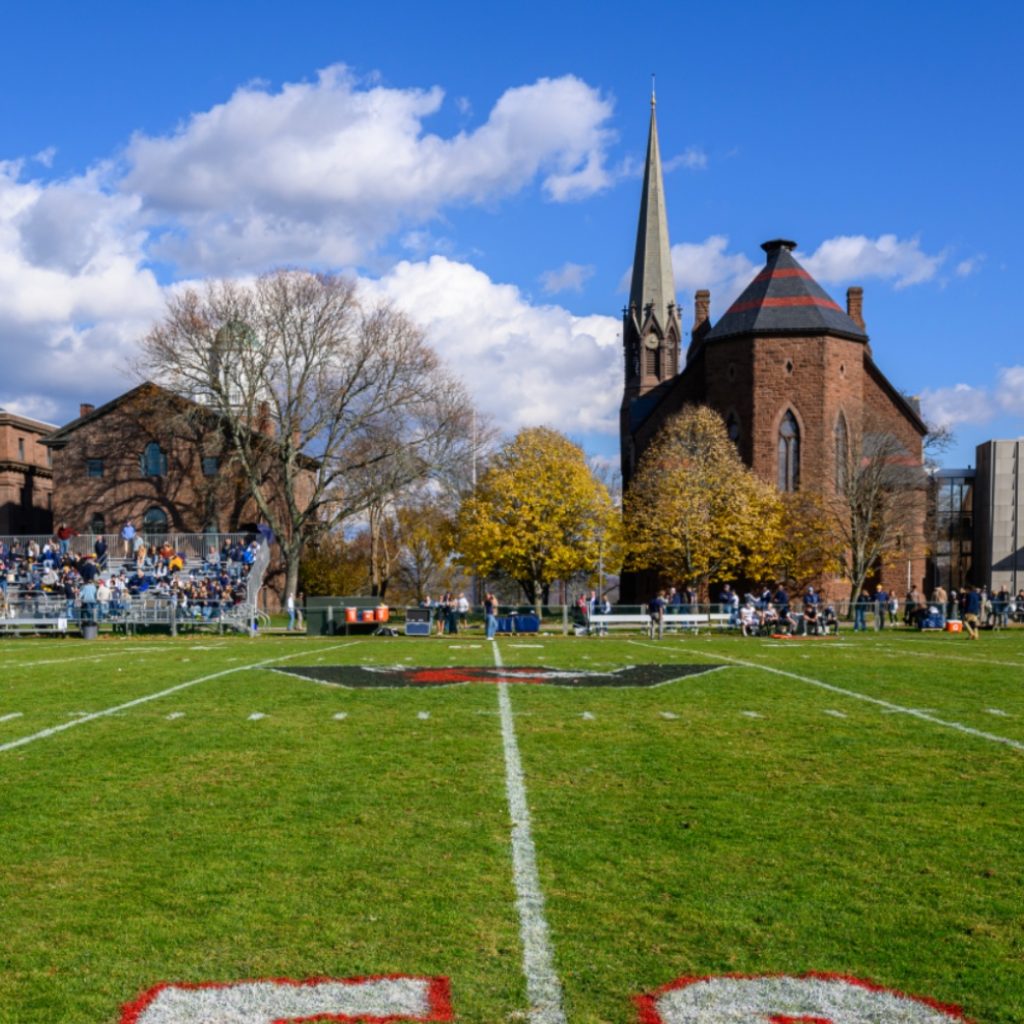
Across the board, these academically elite institutions also take athletics seriously, sponsoring 30+ varsity sports across men’s and women’s programs at each institution. At many NESCAC schools, roughly one-third of the student body is involved in varsity sports, one of the highest participation rates in Division 3. Over the last decade, that investment has translated into consistent national success. A clear example is Middlebury College women’s lacrosse, which has established itself as one of the most dominant programs in all of Division 3, winning four consecutive NCAA national championships from 2022 through 2025. That level of sustained success reflects a broader pattern across the NESCAC, with regular NCAA tournament appearances in lacrosse, field hockey, soccer, basketball, baseball, and softball. Football also reflects the conference’s evolving approach. For decades, NESCAC programs operated on a strict conference-only schedule and didn’t take part in the NCAA postseason, instead crowning a regular-season champion. More recently, that model has shifted, with NESCAC football set to become eligible for the NCAA Division 3 Football Championship beginning this fall.
In the NESCAC, recruiting puts academics first. Coaches cannot guarantee admission, but they can submit a recruit’s transcript, exam scores, and extracurriculars to admissions for a pre-read. Based on the results, the coach can then tell the recruit how likely admission is.
NESCAC schools do not offer athletic scholarships, but they do provide need-based financial aid. Student-athletes also carry the same academic load as non-athletes, and conference rules limit midweek travel to protect class time.
The student-athlete experience at NESCAC schools centers on balancing athletics and academics. Team culture and alumni connections also give student-athletes a networking advantage.
Middlebury’s 2026 women’s lacrosse championship was the program’s 12th NCAA D3 title and the Panthers’ fifth consecutive championship from 2022-26. The victory also gave Middlebury its 50th national championship across all sports. Middlebury has won 46 national titles since the 1993-94 academic year.
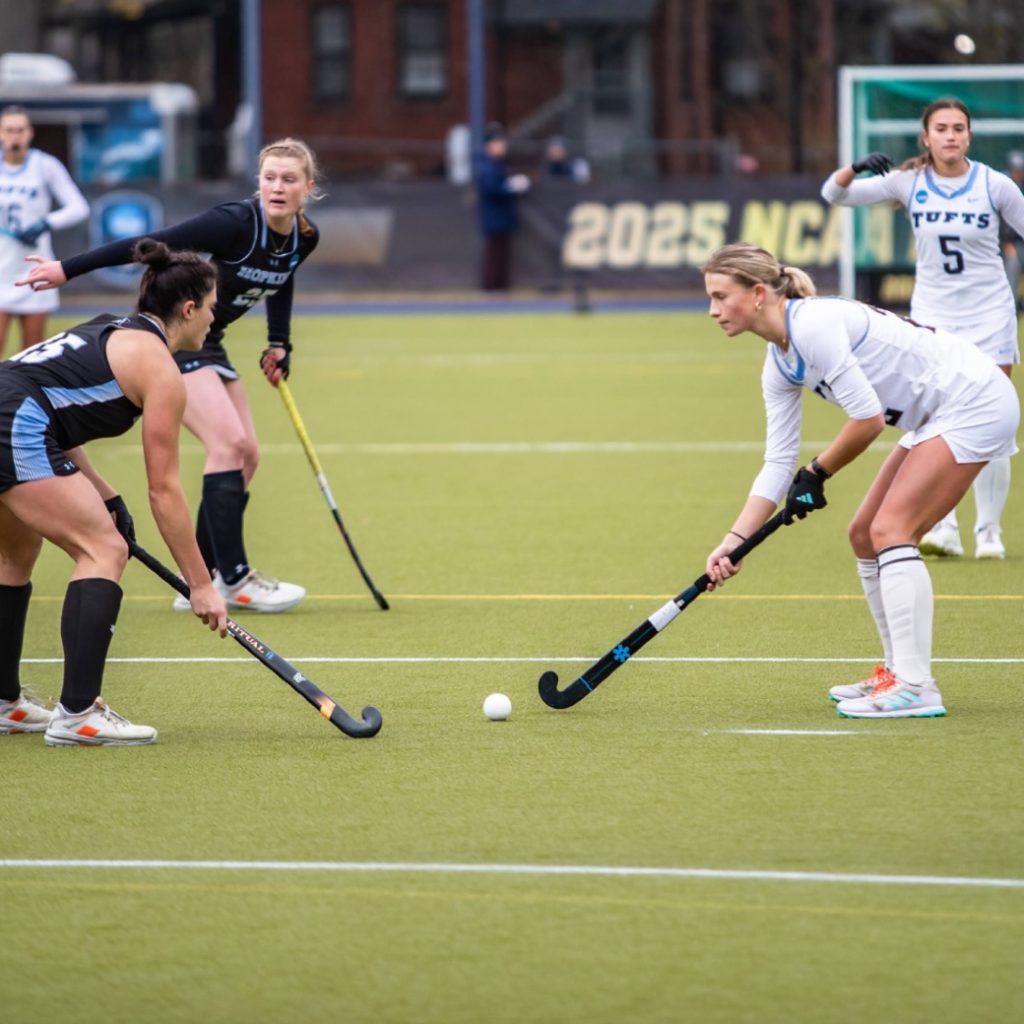
Tufts captured a program-record four team championships in 2025-26, with field hockey, men’s soccer, women’s rowing, and men’s lacrosse all reaching the top of the national podium. The latter two programs extended their title streaks to three consecutive seasons.
Trinity (Conn.) won the D3 Baseball Championship in 2008, finishing the season 45-1, an NCAA record. It remains the only NESCAC baseball program to win an NCAA title.
To boot, the women’s tennis program has won a D3-record 10 team championships, including six consecutive titles from 2008-13. The program won other championships in 2001, 2002, 2015, and 2017. Williams’ men’s tennis team has won three NCAA Division III championships in 2013, 2015, and 2017.

Bill Belichick (Football/Lacrosse/Squash, Wesleyan, ‘75):
Belichick was a three-sport letter winner at Wesleyan University, competing in football, squash, and lacrosse, and serving as a senior team captain. Immediately after graduating, Belichick began his coaching career as a special assistant with the then-Baltimore Colts before serving as a special teams coach with the Detroit Lions, linebackers coach with the Denver Broncos, and defensive coordinator with the New York Giants.
He became head coach of the Cleveland Browns in 1991 and later led the New England Patriots to six Super Bowl championships. He finished his NFL head-coaching career with 333 regular-season and playoff wins and now coaches at the University of North Carolina.
Shannon Finucane (Women’s Basketball, Amherst, ‘12):
Finucane set the Division III record for games played, appearing in 131 games during her four-year run at Amherst. She helped lead the Mammoths to a 124-8 record, including the 2011 national championship, and finished her student-athlete trajectory as the program’s all-time leader in steals with 289.
Allyson Fournier (Softball, Tufts, ‘15):
Fournier established a Division III record with 105.1 consecutive scoreless innings during her senior season at Tufts, while going 35-0 with a 0.20 ERA and 422 strikeouts. A four-time All-American and two-time Honda D3 Athlete of the Year, she finished her career 111-5, with a .957 winning percentage and 16 no-hitters.
Duncan Robinson (Men’s Basketball, Williams, ’17):
Robinson helped Williams reach the NCAA Division III championship game as a freshman. He was named NESCAC Rookie of the Year and became the first first-year student-athlete in program history to earn All-America honors. Robinson transferred to the University of Michigan, where he reached the Division I championship game before spending seven seasons with the Miami Heat. In 2025, he joined the Detroit Pistons in a sign-and-trade with Miami.